Introduction
Making informed business decisions is essential for achieving sustainable growth and maintaining a competitive advantage. Businesses generate large amounts of information every day through sales transactions, customer interactions, financial activities, inventory management, and employee operations. However, collecting data alone is not enough. Organisations need to analyse this information and turn it into meaningful insights.
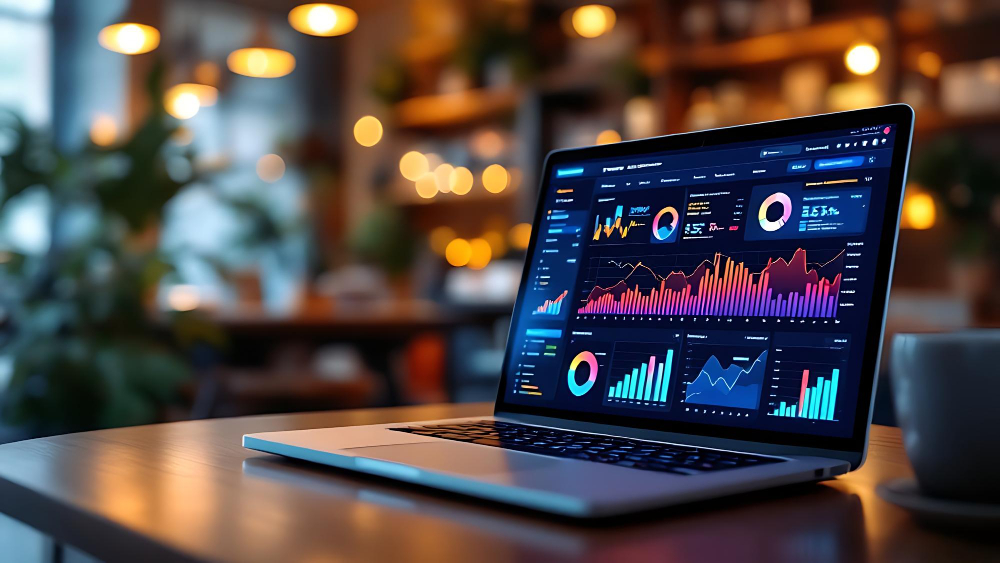
Real-time business analytics helps businesses monitor activities, understand performance, and make decisions using updated information. Instead of depending entirely on outdated reports or manual spreadsheets, managers can access relevant business insights through analytics dashboards and reporting tools.
With the support of modern ERP systems and business intelligence solutions, organisations can improve operational efficiency, identify opportunities, and respond more effectively to changing business conditions.
1. Provides Instant Access to Business Information
Traditional reporting methods often require employees to collect information from different departments before preparing reports. This process can delay important business decisions.
Real-time business analytics provides access to updated information through centralised dashboards and reporting systems.
Business leaders can monitor important metrics such as sales performance, revenue, expenses, inventory levels, and customer activity without waiting for lengthy reporting processes.
This makes it easier to understand the current business situation and take timely action.
2. Improves Financial Planning and Management
Financial information plays a major role in business decision-making. Delayed financial reports can make it difficult to identify unnecessary expenses, manage budgets, and monitor cash flow.
Real-time analytics helps businesses track financial performance through updated transaction records and financial dashboards.
Companies can monitor:
- Revenue and operating expenses.
- Cash flow and payment status.
- Outstanding customer payments.
- Budget utilisation.
- Profitability across business activities.
These insights help financial teams identify potential issues and improve financial planning.
3. Helps Businesses Understand Sales Performance
Sales performance directly influences business growth. Managers need accurate information to understand which products, services, and sales strategies are delivering results.
Real-time analytics allows businesses to monitor sales activities and identify important performance trends.
For example, sales managers can evaluate revenue by product, region, sales representative, or time period.
These insights help organisations identify successful sales strategies, improve team performance, and adjust their approach when targets are not being achieved.
4. Enhances Inventory and Supply Chain Management
Inventory management requires businesses to maintain the right balance between product availability and storage costs.
Without accurate inventory information, organisations may experience stock shortages, overstocking, and unnecessary purchasing expenses.
Real-time analytics helps businesses monitor stock levels, inventory movements, product demand, and purchasing activities.
It can help businesses:
- Identify low-stock products.
- Monitor inventory movement.
- Analyse product demand.
- Track warehouse performance.
- Improve purchasing decisions.
- Identify slow-moving inventory.
This supports better inventory planning and more efficient supply chain operations.
5. Improves Customer Understanding and Experience
Understanding customer behaviour is essential for delivering better products and services.
Real-time analytics helps businesses analyse customer interactions, purchasing patterns, feedback, and service enquiries.
By understanding these patterns, organisations can identify customer preferences and improve their services.
For example, businesses can identify frequently purchased products, evaluate customer engagement, and recognise opportunities to personalise marketing campaigns.
Better customer insights can contribute to stronger relationships and improved customer retention.
6. Supports Faster Problem Identification
Business operations can face unexpected challenges, including declining sales, inventory shortages, payment delays, and operational inefficiencies.
Traditional reporting may identify these issues only after they have affected business performance.
Real-time analytics helps managers monitor key performance indicators and identify unusual changes more quickly.
For example, if sales suddenly decrease in a particular region, management can investigate the reasons and take corrective action.
Early identification helps businesses address problems before they become larger operational challenges.
7. Improves Employee and Department Performance
Monitoring employee and departmental performance helps businesses understand how effectively resources are being utilised.
Analytics tools can provide insights into employee productivity, task completion, sales targets, attendance, and departmental performance.
Managers can use these reports to identify areas that need improvement and distribute resources more effectively.
This creates better accountability and supports more informed workforce planning.
8. Enables Data-Driven Business Strategies
Business decisions based only on assumptions can lead to missed opportunities and unnecessary risks.
Real-time analytics provides measurable information that helps managers evaluate different business situations.
By combining historical trends with current operational data, organisations can identify patterns, assess performance, and make more informed strategic decisions.
This approach supports business planning, product development, resource allocation, and market expansion.
9. Strengthens ERP Integration and Business Visibility
Enterprise Resource Planning (ERP) software connects important business functions such as finance, sales, inventory, procurement, and human resources.
When analytics capabilities are integrated with ERP systems, businesses can gain a more complete view of their operations.
For example, managers can evaluate sales alongside inventory availability and financial performance.
This integrated approach reduces information gaps between departments and helps organisations make decisions based on connected business data.
10. Helps Businesses Identify Growth Opportunities
Real-time business analytics does not only help organisations solve problems. It also helps identify opportunities for improvement and expansion.
Businesses can analyse market demand, sales trends, customer preferences, and operational performance to discover potential growth areas.
For example, sales reports may reveal increasing demand for a particular product category. Management can use this information to adjust inventory, improve marketing activities, or introduce related offerings.
These insights help businesses make better use of available resources and plan future growth.
Best Practices for Implementing Real-Time Business Analytics
To achieve meaningful results from business analytics, organisations should follow a structured approach.
- Define Business Goals: Identify the decisions and business challenges that analytics should support.
- Choose the Right Tools: Select analytics software that matches organisational requirements.
- Integrate Business Data: Connect relevant departments and systems to improve data visibility.
- Maintain Data Accuracy: Ensure information is reliable, updated, and properly managed.
- Use Clear Dashboards: Present important metrics in an easy-to-understand format.
- Train Employees: Help teams understand how to interpret and use business insights.
- Review Performance Regularly: Evaluate analytics results and improve reporting processes.
Conclusion
Real-time business analytics plays an important role in modern business management by transforming operational data into useful insights. It helps organisations monitor financial performance, understand customer behaviour, improve inventory management, evaluate employee productivity, and identify potential business challenges.
When integrated with ERP and business intelligence solutions, real-time analytics provides better visibility across different departments and supports faster, more informed decision-making.
For businesses looking to improve efficiency and achieve sustainable growth, adopting data-driven decision-making is an important step towards building smarter and more responsive operations.
Ready to turn your business data into faster, smarter decisions? Contact Zedunix today to explore real-time analytics and ERP solutions built for your business.