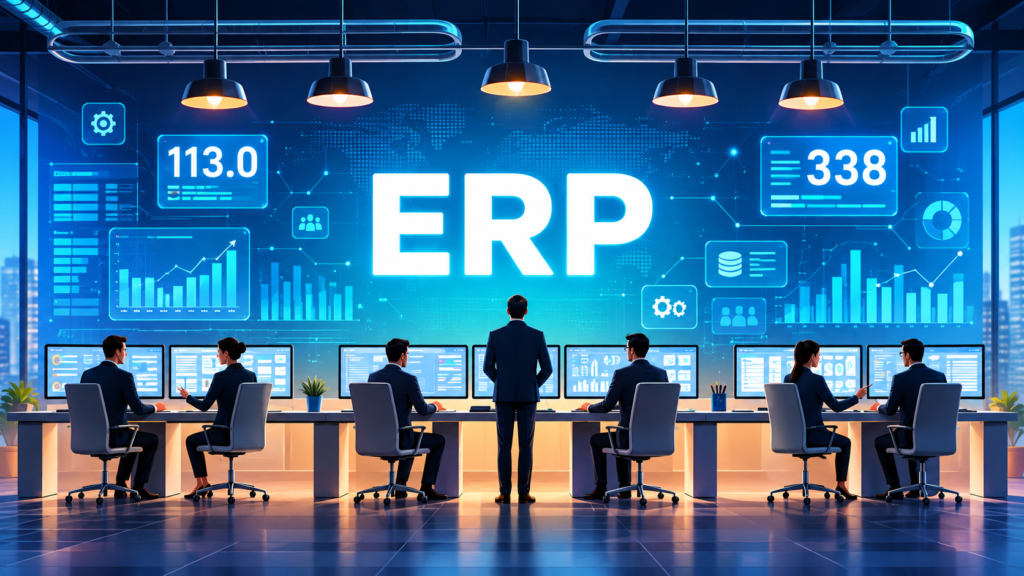
An ERP for construction and contracting firms gives you one system for budgets, procurement, subcontractors, labour, equipment and invoicing. Every dirham spent is tagged to a project and cost code the moment it happens. That lets you see real-time profit per project and catch cost overruns while they can still be fixed, not after handover.
Why project costing is hard in construction
Construction margins are thin, and most overruns don’t come from one big mistake. They come from many small leaks across site and office:
- Material purchases that never reach the project ledger
- Subcontractor claims approved without checking progress
- Labour hours logged late, or against the wrong job
- Variation orders agreed on site but never billed
- Equipment and fuel costs spread across projects with no allocation
When these live in spreadsheets, WhatsApp messages and separate accounting software, the true cost of a project only becomes clear at the end. By then the margin is already gone.
What project costing in an ERP looks like
- Budget by cost code
Build the project budget against a work breakdown structure (WBS): civil, MEP, finishing, preliminaries and so on. Each line has a budgeted quantity, rate and amount. - Commitments, not just actuals
A good ERP tracks purchase orders and subcontract agreements as committed cost. You see what you have promised to spend, not only what has been invoiced, so overruns show up early. - Real-time actuals
Material receipts, supplier invoices, payroll, equipment usage and petty cash post straight to the project and cost code. No month-end reconciliation scramble. - Budget vs committed vs actual
One dashboard compares all three, with a forecast to completion. A trend toward overrun shows up while there is still time to renegotiate, re-sequence or raise a variation. - Progress-based billing
Tie invoicing to measured progress or milestones, including retention, advance payments and variation orders. Cash flow improves when billing keeps pace with work done.
Key ERP features for UAE contractors
Feature | Why it matters |
Multi-project and multi-company accounting | Run several sites and entities in one system |
Subcontractor management | Track agreements, progress certificates, retention and back-charges |
Procurement and inventory | Link requisitions, POs, GRNs and site stock to projects |
Labour and payroll costing | Allocate timesheets and site labour to the right cost code |
Equipment costing | Charge machinery and fleet hours to projects |
Variation order tracking | Capture changes and bill them before they are forgotten |
UAE VAT and e-invoicing readiness | Stay compliant without manual workarounds |
Multi-currency | Handle imported materials and foreign suppliers |
Dashboards and reports | Project P&L, cash flow and cost-to-complete in real time |
A simple example
A contractor in Dubai wins a fit-out project with a 14% planned margin. Midway, material prices for one trade rise and a subcontractor’s claims run ahead of site progress.
- Without ERP: The team notices at month-end when accounts reconcile. The loss is already booked.
- With ERP: Committed cost for that trade crosses its budget threshold in week six. The project manager is alerted, renegotiates the next package, holds the subcontractor’s certificate until progress is verified, and raises a variation for client-requested changes. The margin is protected.
How to get started
- Standardise your cost codes before implementation. Messy codes make messy reports.
- Start with one or two live projects instead of migrating everything at once.
- Train site teams, not just the office. Data quality starts at the site.
- Review budget vs actual weekly, not monthly.
- Choose an ERP that fits UAE requirements such as VAT, local compliance and Arabic/English support.
FAQs
What is project costing in construction ERP?
It is the process of recording, tracking and analysing every cost against a specific project and cost code, then comparing it with the budget to monitor profitability in real time.
How does ERP help control construction costs?
ERP shows committed and actual costs as they happen, flags budget overruns early, and links procurement, subcontractors, labour and equipment to each project.
Can ERP handle subcontractor retention and progress billing?
Yes. A construction-ready ERP manages subcontract agreements, progress certificates, retention, advance payments and back-charges.
Is ERP suitable for small and mid-sized contractors in the UAE?
Yes. Cloud ERP lets SMEs start with core modules such as projects, procurement and accounting, and scale up as they grow.
What is the difference between budget, committed cost and actual cost?
Budget is the planned spend. Committed cost is what you have contracted or ordered but not yet paid. Actual cost is what has been invoiced or paid.
How long does it take to implement ERP for a construction company?
It depends on scope. A focused rollout of core modules typically takes a few months, and starting with pilot projects shortens it.
How ZED ERP supports construction and contracting firms
ZED ERP, from Zedunix, is built to connect project costing with procurement, inventory, HR, accounting and reporting in a single platform. Contractors get a clear view of every project’s financial health, from tender to handover, without stitching together separate tools.
[Book a ZED ERP demo] to see project costing for construction in action.